Why is the water black in Loch Ness?
The real reason Loch Ness looks black: peat washed in from the surrounding hills, not the depth. What that does to visibility, and how the dark water reads from a boat.
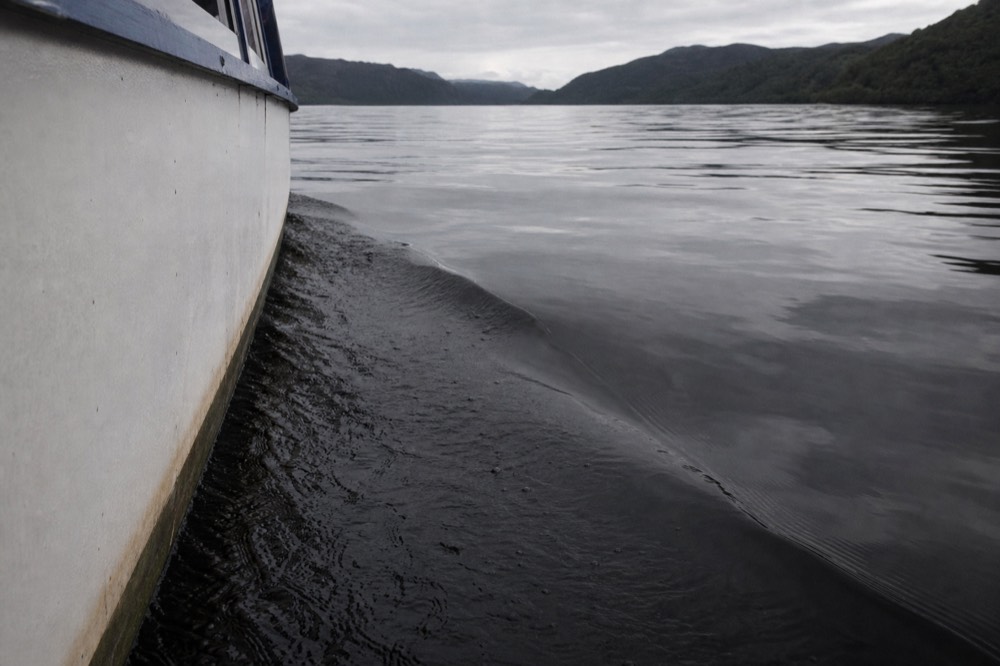
The first time you dip a hand off the side, the colour surprises you. It is not murky in a dirty way, it is clean and cold and the shade of strong tea, and a metre down your fingers simply vanish. I spent seasons pointing this out to passengers who assumed the darkness meant the loch was somehow deeper or stranger than other lakes. The truth is more ordinary and, to my mind, more interesting: the loch is stained by the land around it.
Why is the water black in Loch Ness?
Peat. The hills and bogs of the Great Glen shed fine peat particles into every burn that feeds the loch, and those particles stay suspended in the water rather than settling. They soak up light and tint the loch the colour of dark tea, which is why it reads as black from the surface. It is a soil-and-drainage effect, not a signal of unusual depth.
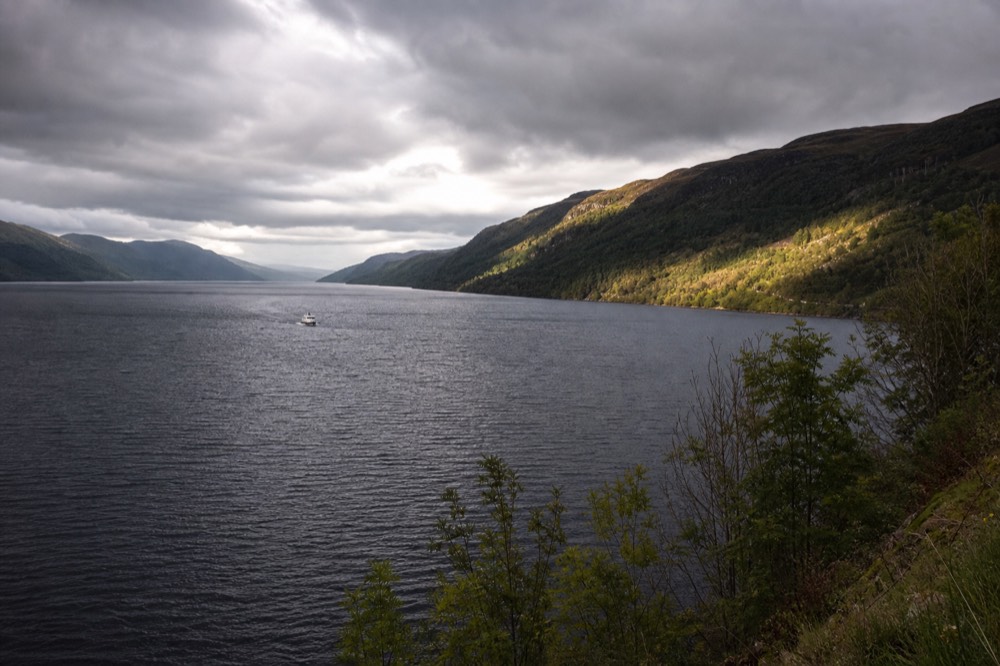
Peat is partly rotted plant matter, and the Highlands are full of it. When rain falls on those boggy slopes, it dissolves and dislodges tiny fragments and carries them downhill into the loch. Because the pieces are so light and the water so cold and still in the depths, they hang in suspension for a long time instead of dropping to the bed. Light entering the water gets absorbed by all that fine material before it can reflect back, so the surface returns almost no colour. The same process darkens peaty rivers and lochans all over Scotland. Loch Ness just does it on a bigger stage.
The canal sailings are the best way to watch the colour shift, because you start in the greener, shallower Caledonian Canal and then slide out into the open loch where the water goes properly dark. The 50-minute version is the quick taste, while the two-hour cruise gives the contrast time to land. Our guide to the Dochgarroch canal departures explains which one leaves from where.
Does the black water mean the loch is bottomless?
No. Loch Ness is deep, about 230 metres at its lowest, but it has a measured, solid bed like any other lake. The blackness comes from suspended peat near the surface, not from unfathomable depth. You could pour the same peaty water into a shallow pool and it would still look dark, because the colour is in the water itself.
The bottomless idea is good folklore and bad geology. This is the largest lake by volume in Britain, holding more water than all of England and Wales's lakes together, and that scale plus the black surface is a tempting recipe for a myth. But the loch has been surveyed thoroughly, and its floor is well mapped. What the dark water really hides is not a secret trench, it is simply everything more than a few metres down, which is why divers and sonar teams find the place so awkward to work. The numbers put the colour in proper context.
| Loch Ness measure | Figure | What it tells you |
|---|---|---|
| Length | ~37 km / 23 miles | A long, narrow glacial trench |
| Maximum depth | ~230 m (755 ft) | Deep, but measured and mapped |
| Volume | ~7.4 km³ | Most fresh water by volume in Britain |
| Underwater visibility | a few metres | Peat, not depth, does the hiding |
That poor visibility is the practical headline for anyone hoping to see beneath the surface. The dark, peaty conditions are exactly why the loch keeps its secrets, monster or no monster, and why every serious search leans on sonar and cameras rather than the naked eye. If you are curious how that ties into the legend, our companion piece on where the sightings cluster picks it up.
How does the black water look from a boat?
Striking, and better than any photo suggests. From the deck the loch reads as a sheet of dark, almost oily calm on a still day, throwing back the hills in sharp reflection, then turning slate and menacing when a squall crosses. Up close it is clearly clean water, not dirty, and the wake behind the boat peels open in a pale ribbon against the black.
This is the part passengers remember. On a flat morning the surface goes mirror-still and the darkness makes the reflections almost unnervingly perfect, hills and sky doubled with a hard edge. Then the wind gets up, the reflections shatter, and the same water turns hard and grey-black in a way that explains every brooding photograph ever taken here. The contrast between the boat's white wake and the ink beneath it is the shot most people chase. I have watched hundreds of visitors lean over the rail just to confirm the colour is real. It is.
Is the peaty water safe and clean to be on?
Yes. The darkness is natural staining, not pollution, and the loch is a healthy freshwater habitat. The real hazards are cold and depth, not the colour. The water sits near 6°C year-round, so cold-water shock is the genuine risk for anyone tempted to swim, which is one more reason a heated cruise boat is the sensible way to be out on it.
Clean does not mean warm, and this is where honesty matters more than romance. That tea-coloured water is properly cold every month of the year, and the far more real danger on Loch Ness is the temperature, not any peat or any legend. Passenger boats here run under strict inland-waters safety rules with lifejackets carried for everyone aboard, which is the comfortable, dry way to meet the dark water. If the plain science of the loch has hooked you, weigh the sailings on our best Loch Ness cruise page, then book the two-hour canal run and check live availability and current prices on the official listing.
| Common assumption | The reality |
|---|---|
| Black water means it is dirty | It is clean, stained by natural peat |
| The colour proves it is bottomless | The bed is deep but fully mapped |
| Dark water is warm and calm | It is near 6°C and can turn rough fast |
So the black is just Scotland's soil in suspension, doing to a whole loch what a peat bog does to a puddle. Deep, cold, clean and dark, all at once. Sail it on a still morning and you will see exactly why the colour launched a thousand stories.
Common questions about the dark water of Loch Ness
Is the black colour the same everywhere on the loch?
Broadly yes, though the edges and the canal sections can look a shade lighter where the water is shallower and greener. Out in the open, deep middle the peat staining is most obvious and the water reads darkest. After heavy Highland rain the whole loch can deepen in colour as fresh peat washes down off the surrounding hills.Can you see the bottom anywhere?
Only in the shallowest fringes near the shore, and even there not far down. Suspended peat cuts underwater visibility to a few metres across the whole loch, so the bed itself, hundreds of feet down in the deep sections, is completely hidden. That poor visibility, not any great mystery, is why searches here rely on sonar and cameras.Does the dark water make the monster harder to disprove?
It does, in a plain way. Because you cannot see more than a metre or two down, nothing beneath the surface is ever confirmed or ruled out by eye, which leaves plenty of room for a good story. The colour is why the legend has proved so stubborn: the loch genuinely will not show you what is under it.Is it worth photographing the black water?
Very much so, and it rewards patience. A still, overcast morning gives you glass-flat reflections against the dark, while a passing squall turns the surface hard and dramatic. The strongest shots pair the pale wake of the boat against the near-black water. Bring something you can steady on a moving deck and shoot into the low light.Choose your Loch Ness outing
A starting recommendation — use the options below to match your plans.
50-minute castle-view cruise
Have your travel date in mind? Audio commentary, sonar and Urquhart Castle views; returns to Clansman without castle entry. Check the departure before arranging the rest of your day.
50 minutes · Starts at Clansman Harbour. 26 steps to the harbour; not wheelchair accessible. Pet dogs welcome on the verified GetYourGuide listing.
Match your plans & compare the options
Would you rather explore the loch or the Nessie exhibition?
50-minute castle-view cruise — 50 minutes; Clansman Harbour. Audio commentary, sonar and Urquhart Castle views; returns to Clansman without castle entry. 26 steps to the harbour; not wheelchair accessible. Pet dogs welcome on the verified GetYourGuide listing.
Two-hour canal and castle-view cruise — 120 minutes; Dochgarroch Lock. The Caledonian Canal, open Loch Ness and Urquhart Castle from the water, with English commentary and sonar. No castle landing. Food and drinks cost extra. Wheelchair access and pet dogs are listed on GetYourGuide.
Inverness coach, cruise and castle visit — 210 minutes; Inverness Bus Station, Stance 7. Return coach from Inverness, a one-hour cruise and around one hour inside Urquhart Castle; admission included. English guide. No hotel pickup or pet dogs; assistance dogs only. Not suitable for limited mobility. Infants need a booked seat and your own car seat.
50-minute canal and loch cruise — 50 minutes; Dochgarroch Lock. A short canal and northern Loch Ness outing, returning to Dochgarroch. No castle visit. Wheelchair access and pet dogs are listed on GetYourGuide; confirm boarding arrangements.
Loch Ness Experience exhibition — 75 minutes; Drumnadrochit, IV63 6AN. A cinematic, self-led journey through Nessie sightings, geology and real research artefacts. A separate exhibition ticket: no cruise, castle admission or transport. Marketed as one hour; allow 75 minutes because the itinerary lists a longer visit. Pet-dog and language requirements need confirmation.
Scheduled departures are a guide; final availability and price are confirmed on Viator.
Check dates: 50-minute castle-view cruise